A New Blueprint for Refugee Inclusion: Five Years of Impact with Mastercard Foundation
From 2020-2025, WUSC has partnered with Mastercard Foundation through the DREEM project to advance the inclusion of young people impacted by forced displacement in postsecondary education and economic opportunities.
Together, we have built more than programs—we have helped shape a new model for inclusion. One that centres refugee leadership, strengthens institutions, and unlocks opportunity at scale.
By working alongside governments, postsecondary institutions, the private sector, and refugee-led organizations (RLO), this partnership has dismantled barriers to education and economic opportunities and created pathways for long-term, transformative change.
Supporting Refugee Entrepreneurs
1,563 Work Opportunities Created for Young People through the DREEM Innovation Fund
Economic inclusion starts with opportunity—and with investment in refugee-led innovation.
Through the DREEM Innovation Fund, developed in partnership with Mastercard Foundation, we supported 258 businesses led by refugees and host community members in Kenya—56% of them women.
The results are powerful:
- 1,563 work opportunities created for young people;
- 100% of microbusinesses supported reported revenue growth; and
- 95% of small businesses reported improved operations.
By strengthening refugee-owned enterprises, we are scaling community-led solutions and driving inclusive economic growth that benefits entire communities.
Advancing Food Security Through Innovation
In Kakuma Refugee Camp, Fabiola is transforming nutrition outcomes through her food company, which produces fortified flours for children and adults.
With support from the Innovation Fund, she secured the raw materials she needed to expand production:
“The support helped me scale my business. With the profits, I bought a milling machine, moved into a larger production space, and secured the area. Now, I can meet demand consistently,” says Fabiola.
Fabiola’s story is a powerful example of what happens when refugee entrepreneurs are given the tools to succeed.
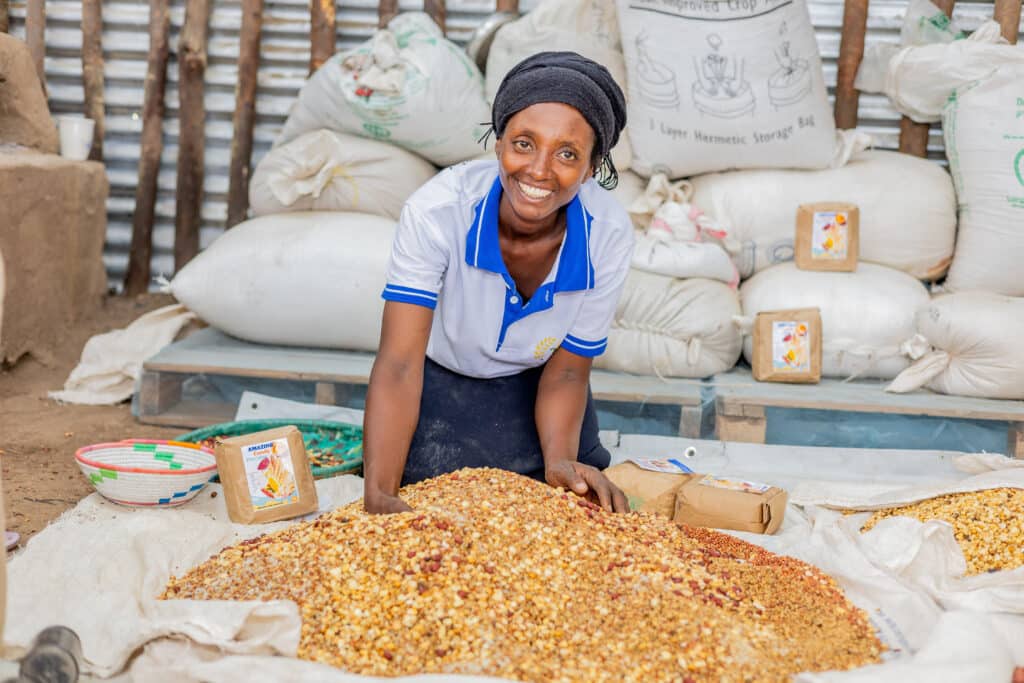
Fabiola is an entrepreneur who was supported by our DREEM Innovation Fund.
Improving Access to Education
Reaching Over 5,000 Young People
Access to postsecondary education begins with access to information.
Through more than 20 outreach visits in refugee communities across Africa, we connected over 5,000 young refugees and displaced young people directly with universities from the Mastercard Foundation Scholars Program—providing real-time guidance and application support.
This approach is closing critical information gaps surrounding scholarship opportunities in refugee communities and opening doors for talented young people who were previously out of reach.
At the same time, it is transforming institutions. Universities are gaining a deeper understanding of the barriers young refugees face—and taking action.
This has contributed to systemic reforms across 24 universities globally, including:
- Application fee waivers;
- Age-limit exemptions for graduate applicants; and
- Tailored psychosocial support and accommodations.
Institutions like the University of Pretoria are now champions of inclusion. Today, it is home to 22 refugee and displaced Mastercard Foundation Scholars—demonstrating that when systems change, opportunity follows.
Creating Peer-Led Pathways to Postsecondary Education
The “University Now” Pilot
Launched in 2024, the “University Now” pilot brought scholarship opportunities directly into refugee communities by placing young people at the centre of the solution.
Co-created with five RLOs in Kenya, this pilot trained 25 young people impacted by displacement as peer-to-peer advisors to guide others through Mastercard Foundation Scholars Program application processes.
The impact:
- 4,370 youth reached through 73 community events;
- 11 universities engaged;
- 33 new partnerships formed;
- 243 students received direct application support; and
- 17 students awarded scholarships.
Beyond the numbers, the model is shifting power. Universities are partnering directly with RLOs, while young people are gaining skills, experience, and confidence to pursue education and employment opportunities.
“We had no idea about these scholarship opportunities before today. Now I can also inform my friends, and neighbors in the camp.” Student, Gedi Secondary School.
Following its success, this model is now being scaled in Kenya and beyond.
Investing in Refugee-Led Solutions
Partnering with 23 RLOs Across Six Countries
Across Africa, refugee-led organizations are driving innovative, locally grounded solutions to complex challenges.
Through DREEM, we partnered with 23 RLOs in six countries—Malawi, South Africa, South Sudan, Kenya, Zimbabwe, and Uganda—providing funding, mentorship, and capacity strengthening. Together, we designed and implemented initiatives that bridge the gap between skills training and formal employment for young people.
In Malawi, the Accelerating Transition to Employment for Refugee Youth (ArTERY) pilot worked with five RLOs in Dzaleka Refugee Camp to expand entrepreneurship, mentorship, and digital freelancing opportunities:
- 57 young people accessed economic opportunities; and
- Their businesses created 72 additional jobs
These results reinforce a core truth: RLOs are best positioned to design and deliver sustainable solutions. By investing in RLOs, we are ensuring that refugee-led innovation is creating sustainable economic growth and job creation.
Putting Refugee Youth Leadership at the Forefront
At the heart of DREEM is a commitment to youth leadership—not just participation, but partnership.
The Youth Advisory Committee (YAC) composed of dynamic young leaders with lived experience of displacement, has played a central role in shaping the project and influencing global conversations.
Most notably, the YAC was instrumental in the development of Mastercard Foundation’s strategy for refugees and displaced people, ensuring that youth voices are embedded at the highest levels of decision-making. The strategy aims to enable 30 million young people, including 2.5 million refugees and displaced people, to access dignified and fulfilling work by 2030.
Their leadership is also inspiring broader change, with partners adopting youth governance models across their own initiatives.
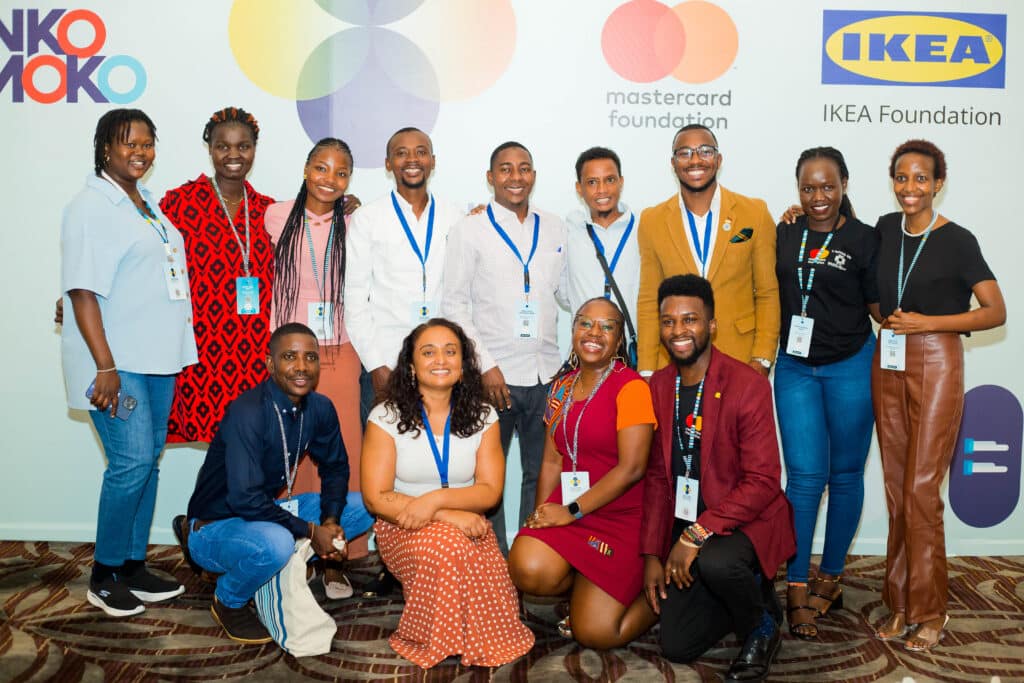
Members of the DREEM Youth Advisory Committee at the Africa Forum on Displacement in Accra, Ghana.
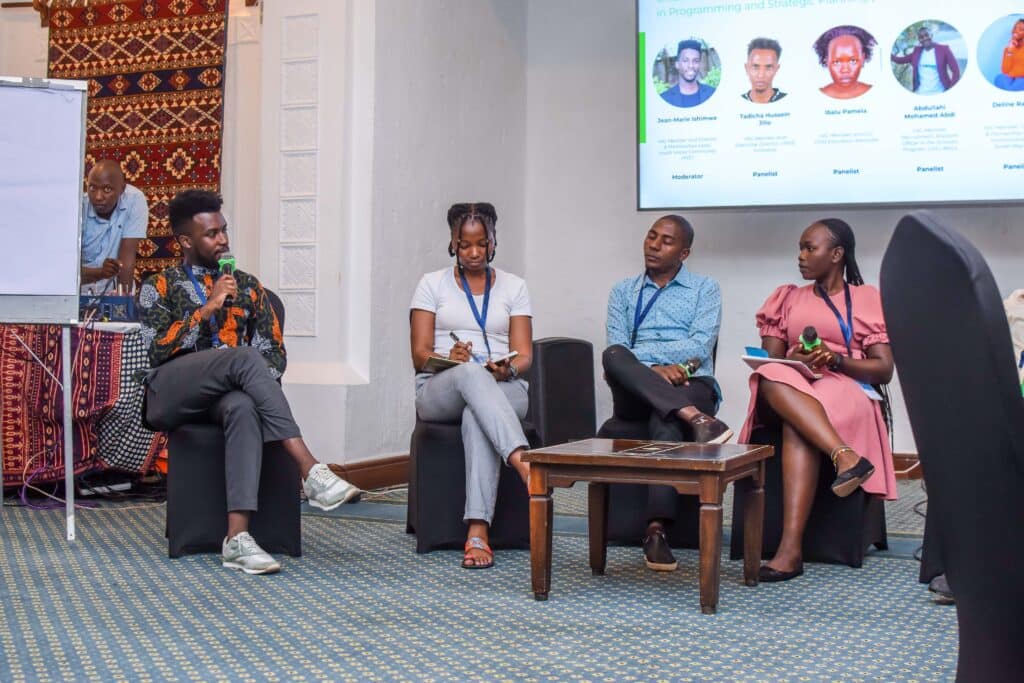
Members of the DREEM Youth Advisory Committee at a workshop organized with Mastercard Foundation in Mombasa, Kenya.
Advocating for Change: Emmanuel’s Journey
For Emmanuel Shyaka, a refugee from the Democratic Republic of Congo now living in Zimbabwe, joining the YAC was transformative.
An educator and founder of TWEENS, an RLO focused on supporting young refugees through education and mentorship, Emmanuel brought his experience in refugee education to the global stage.
“I learned to see myself not just as a refugee, but as a leader and partner in shaping solutions for my community,” says Emmanuel.
Through the YAC, Emmanuel sharpened his leadership, advocacy, and program design skills—and launched a digital skills initiative connecting young people in Tongogara Refugee Camp to online work opportunities.
Today Emmanuel is not only creating change—he is mentoring others to do the same.
“This journey proved to me that when refugee youth are trusted as partners, not just beneficiaries, we do not just participate in change—we lead it,” says Emmanuel.
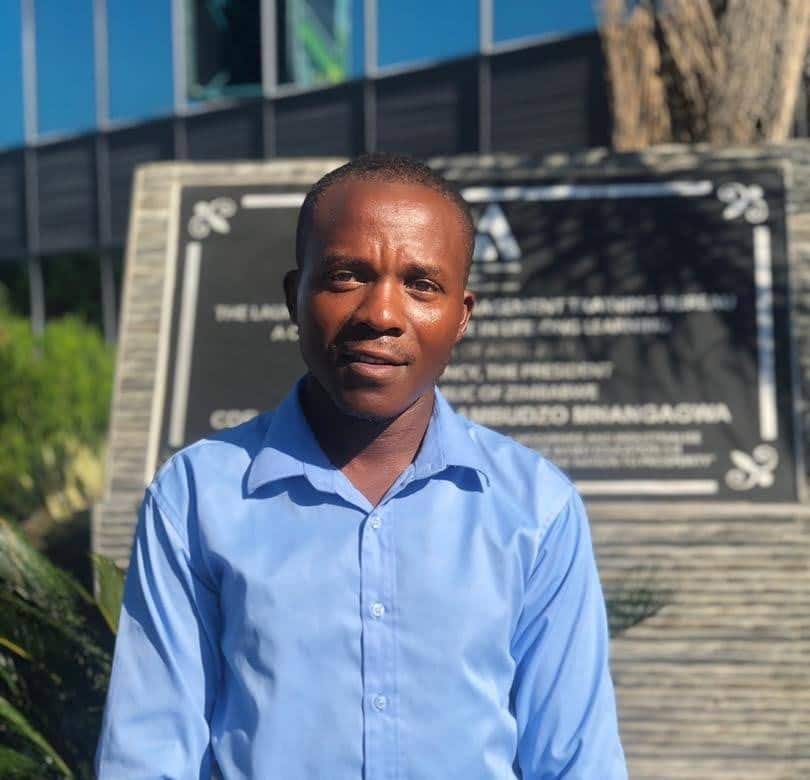
Emmanuel was a member of the DREEM Youth Advisory Committee.
A Shared Vision for the Future
This partnership has shown what is possible when we work with young refugees and displaced young people as leaders, innovators, and partners in change. As we move into DREEM 2.0, we are building on this momentum with even greater ambition:
- 1 million youth accessing dignified and fulfilling work;
- 35,000 displaced youth pursuing higher education; and
- Expanded partnerships with over 60 RLOs across Africa
We are proud of what we have achieved together—and energized for what lies ahead.
Together with Mastercard Foundation, we are helping build a future where displacement is no longer a barrier to education, opportunity, or leadership—and where young people have the power to shape their own futures.