Gender Equality at the Heart of Climate Resilience
In West Africa, climate policies often overlook those on the frontlines: women. Farmers, water bearers, keepers of knowledge, they raise the next generation and steward the land. Yet their voices remain too invisible in the decisions that shape their lives. But change is underway: quiet, yet powerful. In the forests of Guinea, Ghana, and Côte d’Ivoire, women are shifting the tide. They are not just planting trees; they are reclaiming their role as environmental leaders.
At the heart of the nature-based climate adaptation project in the Guinean forests, implemented by WUSC and CECI, with the support of Canada and in partnership with ABANTU For Development, CIFOR-ICRAF, IBOL, and IUCN, they are proving that ecosystem restoration also means restoring power.
From participants to essential leaders
In Guinea, women once marginalized are now leading conservation efforts. In villages like Barékhouré and Kounounkan, they run nurseries, monitor biodiversity, and pass on their knowledge to their families. They are learning to regenerate soil and produce biofertilizers on demonstration plots, strengthening food security in their communities.
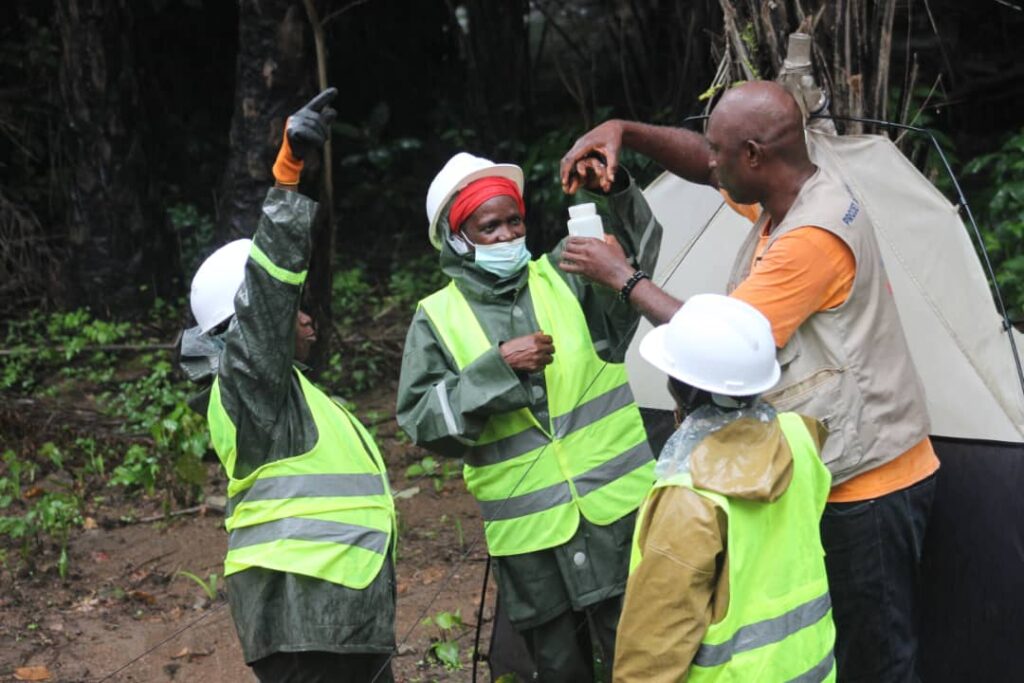
Insect collection by women, under the supervision of the ACC project specialist for Kamalayah in Guinea.
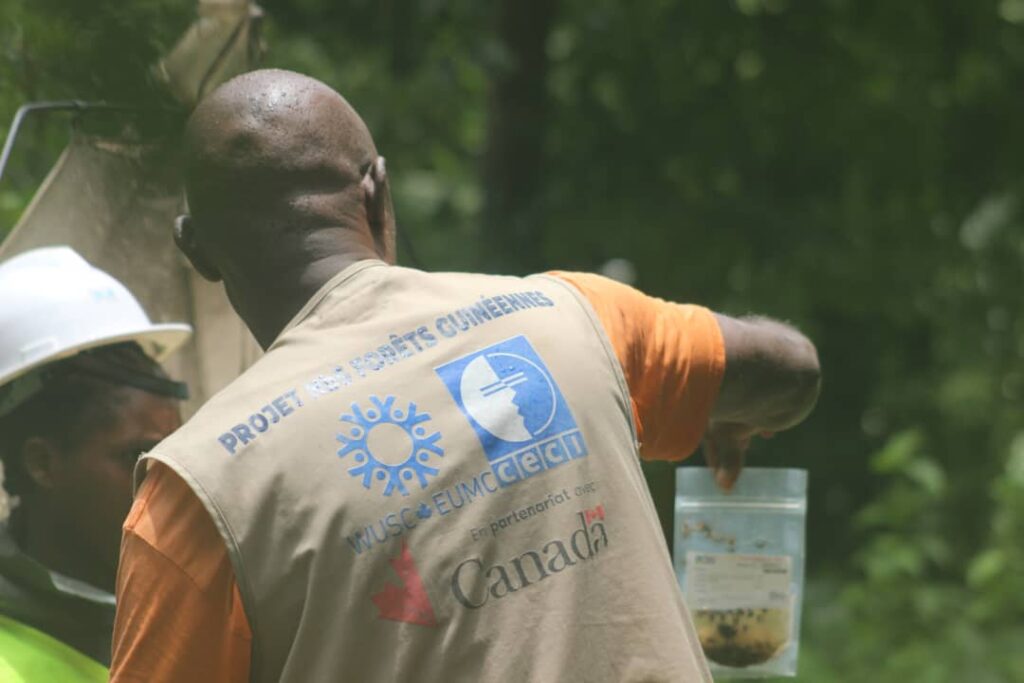
Under the guidance of the ACC specialist, women in the Kamalayah project in Guinea are learning insect harvesting techniques.
“I work as a Malaise trap collector. Every Friday, I leave early in the morning with other women to gather samples. This work brings me pride and social recognition. I am not entirely dependent on my husband; I contribute to the wellbeing of my family.” Mamady Conté, Kamayah
In Ghana, 80 women play a key role in biodiversity monitoring. Trained in DNA sequencing, they collect data through Malaise traps, contributing to our understanding of forests, cocoa fields, and plantations, while deepening their bond with the land.
In Côte d’Ivoire, women don’t just plant trees, they choose them. In the regions of Lôh-Djiboua and Nawa, they help select species such as shea, mahogany, and avocado for their ecological value and potential to generate income. Through beekeeping and non-timber forest products, they are creating new livelihoods while protecting the forests that protect them.
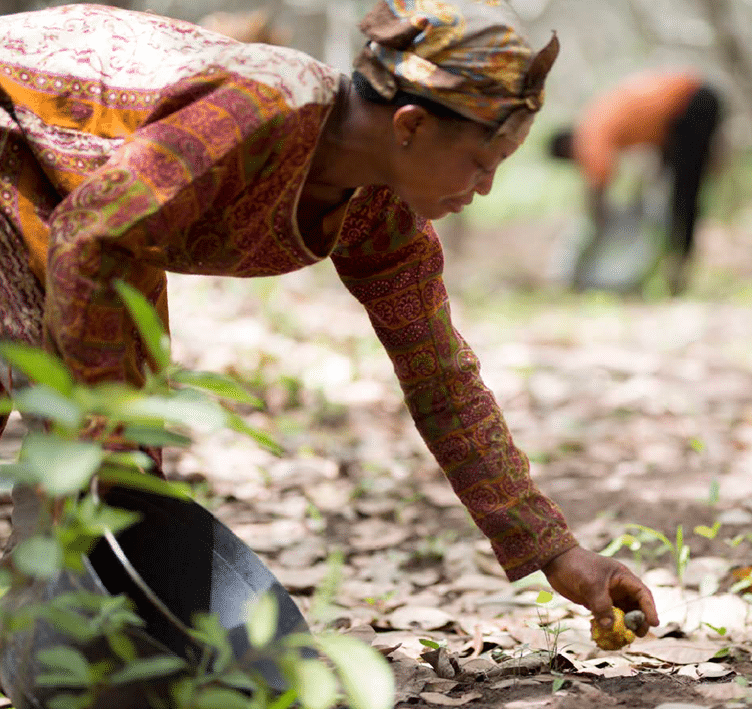
Collection of cashew nuts intended for seed production in Wonsealy, Buyo, Nawa region, Côte d’Ivoire.
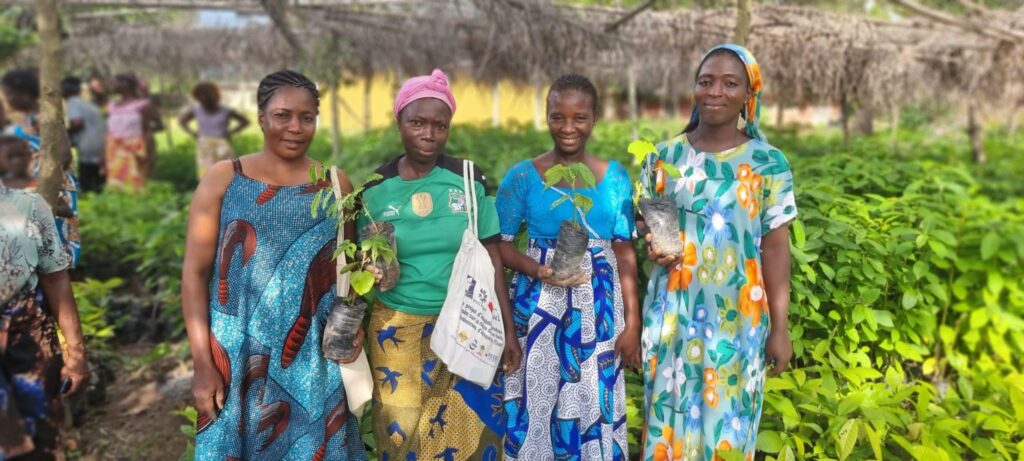
Women from the N’Driagui nursery proudly presenting the seedlings they produced. Soubré, Nawa region, Côte d’Ivoire.
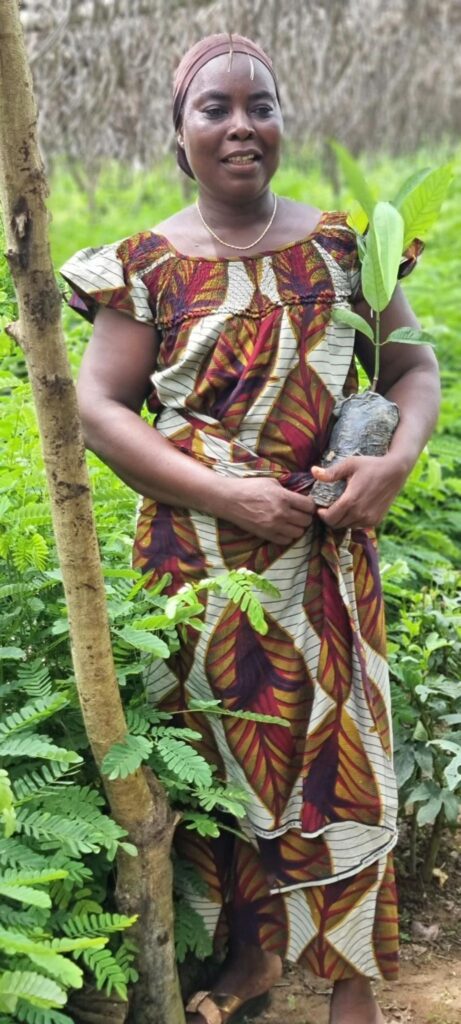
Ms. BAMBA, President of the Women of Kragui, harvesting in the field.
“In the past, many projects imposed seedlings without asking our opinion. With this project, we choose the seedlings: some feed us, others heal us. Our voice finally counts.” Mme BAMBA, President of the Women of Kragui.
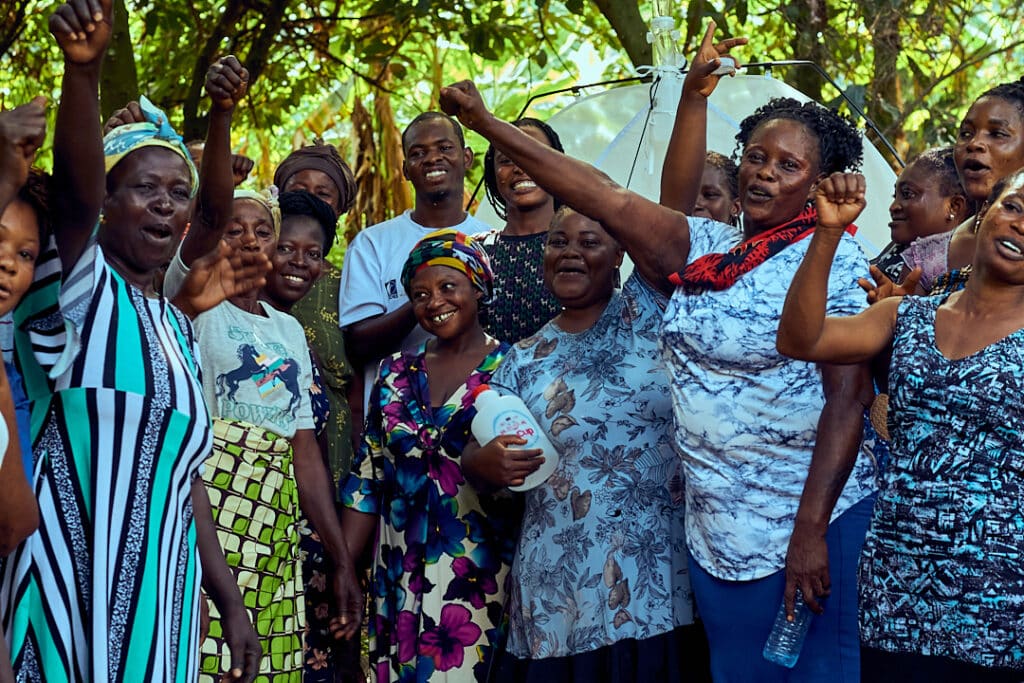
A sample Malaise trap (left) and women deploying a trap (Right) on 6 November 2024 at the Duase Community within Lake Bosomtwe in Ghana.
Resilience measured in transformed lives
These women are at the heart of a transformation. Over the past two years, their efforts have restored more than 3,200 hectares of landscapes across the three countries, through agroforestry and natural regeneration.
But the impact goes far beyond numbers. It is a social and economic transformation. In Guinea, the rice sector is being strengthened. In Côte d’Ivoire and Ghana, women are entering cocoa value chains. Everywhere, new opportunities are emerging: honey, oils, biodiversity credits…
More than 2,000 community members, 68% of them women, have been mobilized and supported to formalize their groups, giving them access to local governance and financing. In Côte d’Ivoire, a gender-sensitive framework has been integrated into Local Development Plans, while in Guinea, the project contributed to enriching the national climate planning guide.
Gender equality as a climate solution
These stories demonstrate that placing women at the center of nature-based solutions paves the way for a fairer, more sustainable world. Forests regenerate. Local economies diversify. And women gain a stronger voice in the decisions that shape their lives and those of their children.
Investing in women and youth is not about ticking a box. It is about investing in a future where forests and communities thrive together. For donors like Global Affairs Canada, every hectare restored and every woman trained is proof that resilience and equality advance hand in hand.