How can More Refugees Access Dignified Work? A Behind-the-Scenes Look at the RPL Process in Kenya
Through employment, volunteer work, training, or personal encounters, many individuals, including refugees and Internally Displaced Persons (IDPs), possess diverse skills and experiences that position them for dignified work. However, a lack of formal documents may prevent their access to these work opportunities.
In response, the Recognition of Prior Learning (RPL) Policy Framework, unveiled in Nairobi in 2024, offers an inclusive approach by recognizing the skills of individuals in Kenya who possess competencies but lack educational certifications.
According to research by the World Bank, RPL policies are successful in increasing the chances of finding work through formal job search channels and at formal and larger private companies, facilitating the transition of individuals who are unemployed or underemployed into employment. In addition, participants have “overwhelmingly positive opinions” of RPL.
Individuals in Kakuma Refugee Camp and Kalobeyei Integrated Settlement participated in RPL through the DREEM Project, a WUSC initiative in partnership with the Mastercard Foundation and additional WUSC partners.
The process engaged 400 participants who learned that although they may lack official documents—due to their migration history or informal skill acquisition—they may be eligible to receive certification through the newly-established RPL policy framework in Kenya.
For those interested in receiving certification, the first step involves creating a portfolio of evidence, which may include past work samples in the form of photographs and videos, certificates, or testimonials. For instance, a refugee who works as a plumber may assemble a portfolio which includes photos of their completed projects, a testimonial from a satisfied customer, or a certificate from a plumbing course they received in their home country.
After an applicant submits their evidence, an RPL assessor supports them with portfolio development and provides the approval for an evaluation. The evaluation involves a panel of three experts — an industry professional, a relevant subject trainer, and an RPL specialist — who evaluate the candidate’s skills through both theory and practical examinations.
After successfully demonstrating competency in their chosen field, the experts recommend a candidate for graduation, where they are awarded an RPL certificate.
The below photos offer snapshots of the RPL assessment process conducted in Kenya’s Kakuma Refugee Camp and Kalobeyei Integrated Settlement, which led to the successful graduation of 28 individuals who were awarded certificates. They are now well-positioned to access increased opportunities, including dignified work.
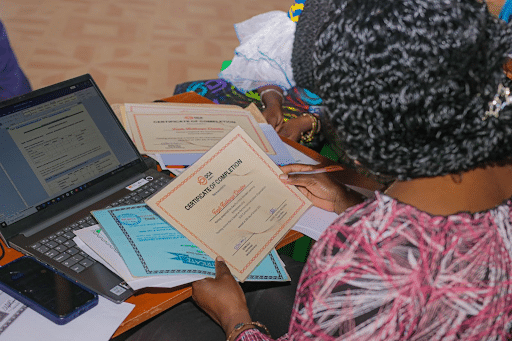
Stella Khaemba, a trainer from Kitale National Polytechnic, assesses certificates submitted by refugees from Kakuma Refugee Camp and Kalobeyei Settlement as part of a portfolio of evidence for consideration for RPL assessment.
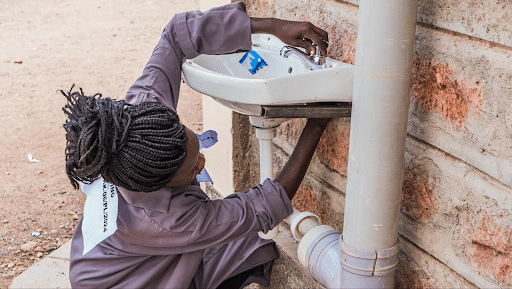
Nania Anur Anar, a refugee from Kakuma Refugee Camp, conducts plumbing work on a sink system as part of her practical assessment.
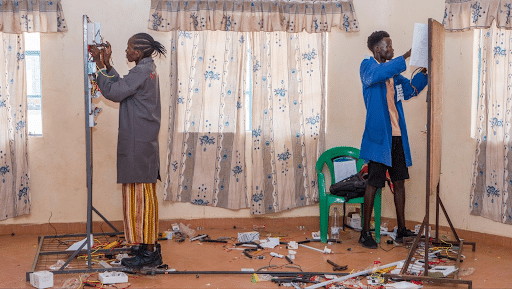
From left: Kaka Kandura Haroun and Matio Kiir Kon work on electrical switchboards for their practical RPL assessment.
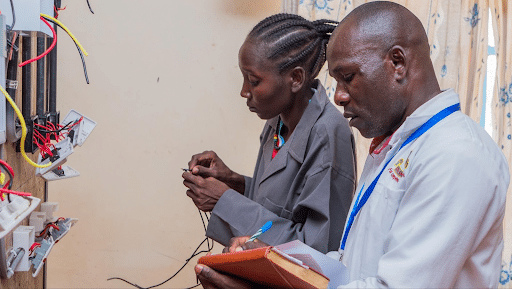
An electrical trainer from Kitale National Polytechnic, Frederick Simiyu, assesses RPL candidate Kaka Kandura Haroun.
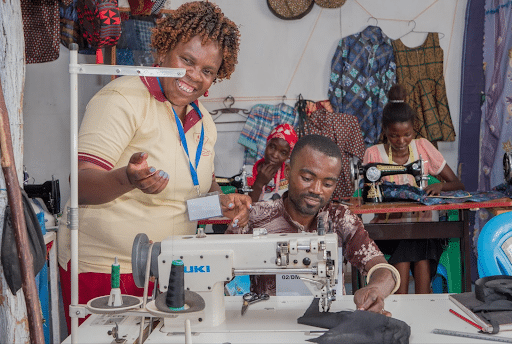
A tailoring and dressmaking trainer from Kitale National Polytechnic smiles as she supervises a male refugee who is stitching a clothing item for his RPL assessment.